A solver others could build on
Tufa Labs won the first milestone with the Duck, running Qwen 3.6 27B. Around July 1, the solver was opened to the field. It gave the model a Python tool for investigating games and taking actions: a runnable starting point that other competitors could inspect, adapt and improve.
The opening of the Milestone 1 solutions, led by the Duck, was followed by a broad lift across the medal lines. From June 30 to July 5, gold rises from 0.70 to 1.32, silver from 0.44 to 1.08 and bronze from 0.38 to 0.85. All three roughly double in five days. At this stage, the gains are small enough to vanish near the floor of a season-long linear chart. On the logarithmic view, the first lift is unmistakable.
The Duck mattered as a piece of shared engineering. Its influence can be traced directly to one of the next milestone’s winners.
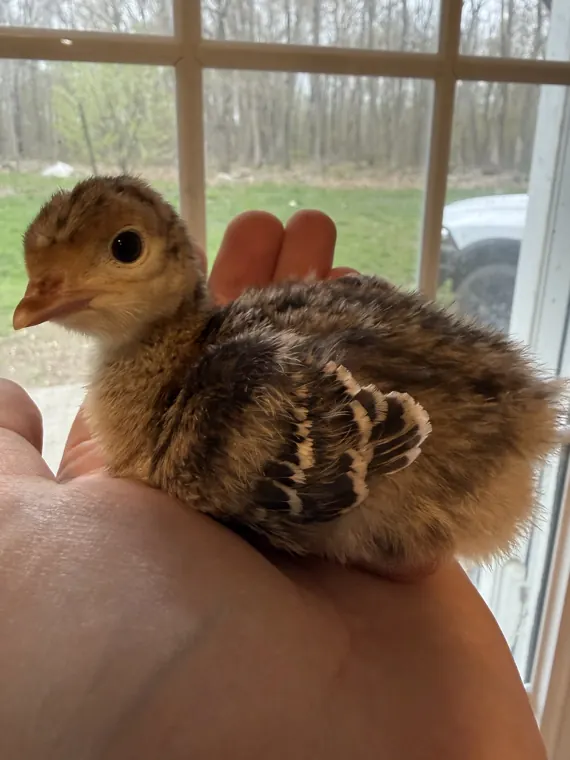
The turkeys had hatched beside Barney’s computers that spring. The wild ones can fly and are not too friendly, Barney points out. Generations of breeding have made these “big, fat, and friendly.”
The leaders find another gear
In August, the model inside that loop changed. Qwen 3.8 27B arrived on August 14, followed by Flash Next on August 26. By September 15, the top score is 18.81, up from 1.86 on August 5. Bronze moves from 1.19 to 3.43. The whole field is no longer climbing together.
Daniel Franzen supplies a firsthand account of the model changes: “Better models help a lot.” His write-up credits substantial improvements to each move from Qwen 3.6 27B to Qwen 3.8 27B and then Flash Next. His work also changed how the solver saw games, retained useful code and spent its time. The result combined a stronger model with improvements around it.
The hardware limit matters here. A competition notebook must run offline, within its allotted machine and time. The coding assistants shown faintly beneath the chart could help write the system; they could not be called as cloud APIs during its scored run. An open model that fits the notebook is what gets to play.
“There’s something special over there in the training pipeline at Alibaba.”Mark Barney, ARC Daily Digest editor and Team Turducken competitor, after reading many traces from these models.
Barney, who has watched Tufa’s Machine Learning Street Talk appearance several times, recalls the team singling out Qwen 3.6 as special. The episode listing identifies Tufa as an MLST sponsor.
What had been an advantage became a starting point
Tufa’s own score rises from 18.81 on September 25 to 50.65 on September 30. Then the Milestone 2 notebooks go public together. The deadline was 23:59 UTC on September 30. Work that had carried the leaders through the milestone was suddenly available to everyone.
Franzen’s released notebook runs Qwen 3.8 Flash Next and reports a public score of 27.89. His write-up explicitly credits Tufa’s Duck as its foundation. By October 2, bronze has risen from 4.04 to 25.04, and silver is near 28. The field has grown by less than three per cent.
The individual histories make the scale of the change clearer. In the daily record, 185 teams jump from below 10 into the 25-to-35 band on October 1, followed by 83 on October 2. Nothing like that wave appears before the deadline. On October 1, Maren Sajdaras rises from 3.78 to 32.29.
Franzen’s notebook became the busiest public door into that new range. By November 2, Kaggle showed 2,113 copies started, far ahead of the other notebooks checked. The next highest, at 569, was itself Franzen’s notebook with two cells changed. Copies are not competitors—one person can start several—but the line of descent is visible in the code.
Milestone 1
Milestone 2 · 27.89
Mark Barney’s firsthand account
For Team Turducken, the connection is firsthand: Barney says the team built on Franzen’s notebook. Other teams’ jumps suggest the spread of shared methods; their scores cannot tell us which notebook they used.
Here is the clearest answer the season gives Cristiano. A better model helped make the leap possible. Shared engineering delivered it to the crowd. Flash Next was five weeks old when the field jumped; the public record cannot divide the credit between the model and the work around it.
The starting point stayed. The leaders moved.
Qwen dominates the models we can identify
Of the 300 most-voted public ARC-3 notebooks, the census identifies named or likely model use in 139. It assigns 129 to Qwen—75 named, 54 inferred. Flash Next leads with 70: 49 name it, and another 21 attach its runtime with the model name hidden.
These notebooks show what was available to copy, including many copies of the same recipe. The leaders’ current submissions remain private.
The middle pile is the season’s lasting shape. Some of its gradual rise may be the reward for trying again: another run can beat the previous one without a change of method. The gap to the leaders is a different order of climb.
The Duck’s contribution was not exhausted when another team passed its score. Its descendants kept competing. The question now is how much of the public progress survives the private evaluation.